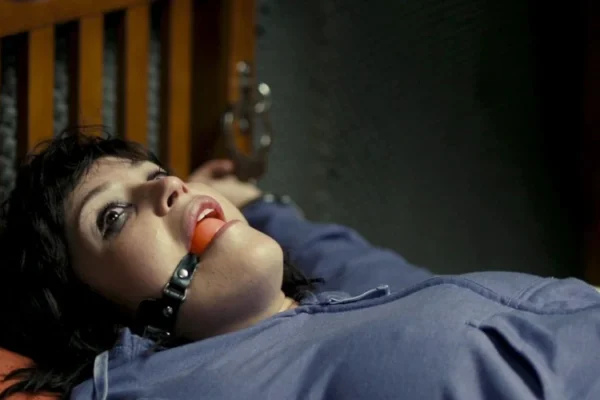
Sorti en sortie cinéma 2023, Le Consentement est un drame franco-belge réalisé par Vanessa Filho. Adaptation du livre autobiographique de Vanessa Springora, le film français plonge dans les années 1980 pour raconter une histoire d’emprise et de pédocriminalité au sein du milieu littéraire parisien. Pensé comme une œuvre de fiction mais ancré dans le réel, il s’inscrit dans la continuité des débats #MeToo sur le consentement et la responsabilité collective.
Résumé
Le Consentement se déroule à Paris, au milieu des années 1980. Vanessa, 13 ans, grandit avec sa mère dans un milieu où la littérature est très valorisée. Adolescente brillante, passionnée de livres, elle est fascinée par un écrivain reconnu, Gabriel M., figure adulée des salons parisiens et des plateaux télé. Une rencontre, puis une correspondance, installent rapidement une relation asymétrique où l’admiration de la jeune fille devient le terrain idéal pour une emprise.
Gabriel, quinquagénaire célèbre, se présente comme un amoureux des « amours interdites ». Sous couvert d’éducation sentimentale, il s’immisce dans la vie de Vanessa, l’isole progressivement de son entourage et impose une relation sexuelle qu’il présente comme une histoire d’amour exceptionnelle. Le film suit le point de vue de la jeune fille, entre exaltation, confusion et souffrance, en montrant comment elle se persuade d’être consentante alors même qu’elle est victime.
Au fil du récit, Le Consentement met aussi en lumière la passivité, voire la complaisance, d’un certain milieu intellectuel et mondain qui ferme les yeux sur les agissements de l’écrivain. Sans dévoiler la fin, la structure du film relie cette adolescence brisée au récit ultérieur de Vanessa adulte, qui trouve dans l’écriture le moyen de reprendre le contrôle de son histoire.
Fiche technique
- Réalisation : Vanessa Filho
- Scénario : Vanessa Filho, en collaboration avec Vanessa Springora et François Pirot, d’après le livre autobiographique Le Consentement de Vanessa Springora
- Genre : Drame
- Pays d’origine : France, Belgique
- Langue : Français
- Durée : 118 minutes
- Date de sortie : 11 octobre 2023
- Classification : interdit aux moins de 12 ans avec avertissement
Distribution
- Kim Higelin : Vanessa Springora adolescente
- Jean-Paul Rouve : Gabriel Matzneff
- Laetitia Casta : la mère de Vanessa
- Élodie Bouchez : Vanessa Springora adulte (en 2013)
Autour du film
Le film est l’adaptation du livre de Vanessa Springora, récit autobiographique paru en 2020, qui a contribué à relancer en France le débat sur la pédocriminalité et la culture de l’impunité dans certains milieux intellectuels. Vanessa Springora participe à l’écriture du scénario, ce qui ancre la mise en scène dans son point de vue et sa mémoire, même si le film prend forcément des libertés de condensation et de simplification.
Vanessa Filho choisit de ne pas faire un simple illustration du texte, mais de travailler les sensations : la confusion d’une adolescente qui croit vivre une grande histoire d’amour, les silences gênés des adultes, la violence symbolique des salons littéraires où l’on célèbre un auteur qui revendique ses pratiques. Le cinéma apporte ici ce que l’autrice elle-même a décrit comme une dimension que « les mots ne peuvent pas atteindre », en donnant un corps et un visage à l’emprise.
Du côté de la presse, Le Consentement critique est partagée. Plusieurs médias saluent un film courageux, qui affronte frontalement un sujet difficile sans chercher le sensationnalisme, et insistent sur la justesse de Kim Higelin et Jean-Paul Rouve. Certaines critiques mettent aussi en avant la manière dont le film replace l’affaire dans un contexte social plus large, celui d’une société longtemps complaisante avec les violences sexuelles commises par des hommes de pouvoir.
D’autres, en revanche, reprochent au film un manque de cohérence formelle, ou estiment que la mise en scène ne trouve pas toujours la bonne distance dans les scènes d’intimité. La manière de filmer le sexe, jugée trop frontale ou au contraire trop esthétisante selon les points de vue, a particulièrement divisé. Ce débat critique rejoint une question centrale : comment montrer à l’écran une relation de domination sexuelle sans la reproduire ni la banaliser ?
Sur le plan commercial, Le Consentement a connu une trajectoire atypique. Après un démarrage modeste, les entrées augmentent au fil des semaines, à rebours de la courbe habituelle des films en salle. Le long-métrage dépasse ainsi le seuil symbolique du demi-million de spectateurs en France, avec plus de 600 000 entrées cumulées, performance remarquable pour un drame aussi sombre.
Cette remontée spectaculaire est largement attribuée au bouche-à-oreille sur les réseaux sociaux, en particulier TikTok, où de nombreuses adolescentes se filment à la sortie des séances, bouleversées par ce qu’elles viennent de voir. Des vidéos virales, totalisant des centaines de milliers de vues, transforment progressivement le film en phénomène générationnel, loin des codes habituels des blockbusters. Plusieurs analyses soulignent que là où les politiques culturelles peinent à toucher un public jeune et populaire, ce sont ici les réseaux qui ont joué le rôle de passeur.
FAQ
- Le film est-il fidèle au livre de Vanessa Springora ? Globalement, oui. Le film suit la trame principale du récit de Vanessa Springora et reprend les grandes étapes de la relation avec l’écrivain, tout en condensant certains personnages et situations pour tenir en 1h58. Ce n’est pas une reproduction mot à mot du livre, mais une adaptation du livre de Vanessa Springora qui cherche surtout à transmettre les émotions, la confusion et la difficulté à nommer l’abus.
- À partir de quel âge peut-on voir Le Consentement ? En France, Le Consentement est interdit aux moins de 12 ans avec avertissement. Compte tenu de ses thèmes (violences sexuelles sur mineure, pédocriminalité, scènes d’emprise psychologique), il s’adresse plutôt à des adolescents suffisamment matures et à un public adulte. De nombreux enseignants et éducateurs l’utilisent comme support de discussion sur le consentement et les violences sexuelles.
- Où voir le film Le Consentement aujourd’hui ? Après sa sortie cinéma 2023, Le Consentement est désormais disponible en vidéo à la demande et sur certaines plateformes de streaming ou de TV à la demande, selon les territoires. Il circule également encore ponctuellement en festivals, en séances spéciales ou dans des cinémas d’art et essai, souvent accompagnés de débats.