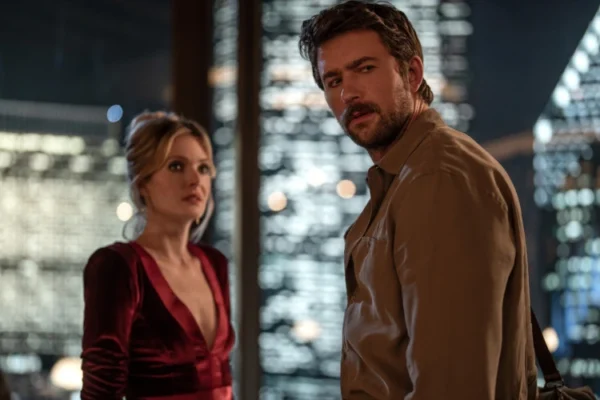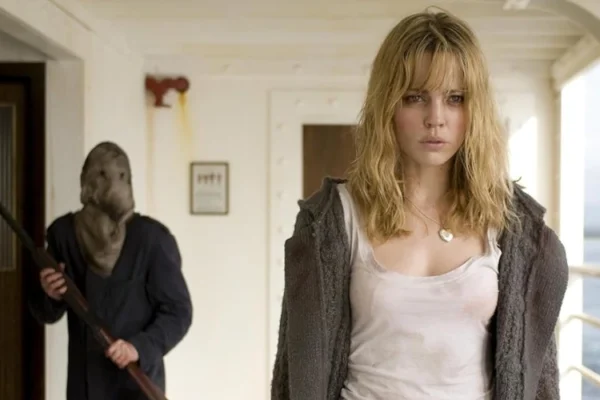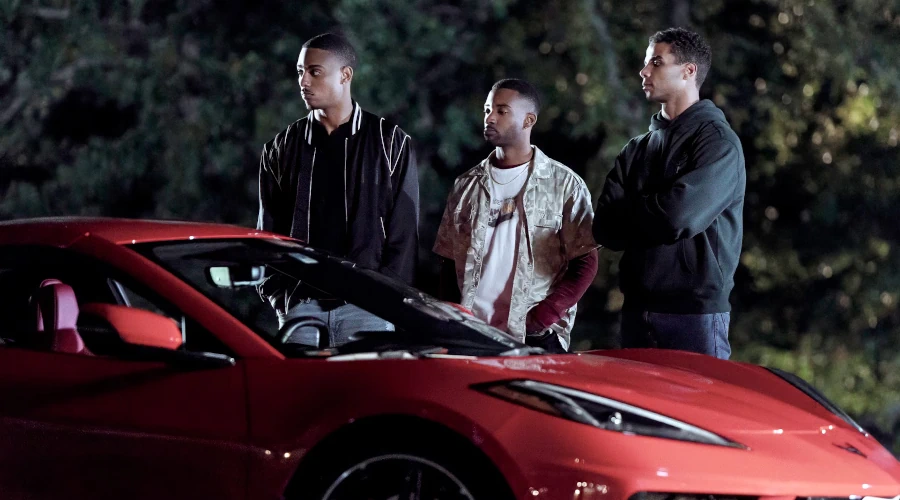
The Gates est un thriller américain écrit et réalisé par John Burr, sorti en 2026. Le film suit trois amis qui, en traversant en voiture une résidence sécurisée et fermée, sont témoins d’un meurtre. Piégés dans cet environnement clos et surveillé, ils tentent de s’en sortir sans devenir les prochaines victimes. Ce huis clos tendu, distribué aux États-Unis par Lionsgate Premiere, réunit un casting solide emmené par Mason Gooding, Algee Smith et Keith Powers. The Gates retient également l’attention pour une raison particulière : il constitue le dernier rôle au cinéma de James Van Der Beek, décédé le 11 février 2026, quelques jours avant la première du film.
Résumé
Derek, Kevin et Tyon sont trois amis qui se retrouvent au mauvais endroit au mauvais moment : en traversant en voiture une résidence privée et sécurisée, ils sont témoins d’un meurtre. Coincés derrière les grilles de cette communauté fermée, ils comprennent rapidement que leur présence les met en danger. Les habitants de la résidence, dont Jacob, un pasteur au comportement ambigu incarné par James Van Der Beek, et Elizabeth, semblent déterminés à empêcher la vérité d’éclater au-dehors.
Les trois amis doivent alors trouver un moyen de s’échapper tout en évitant d’attirer l’attention sur eux. L’officier Bobby, chargé de la sécurité du quartier, représente une menace supplémentaire dont les intentions restent floues. La résidence, en apparence paisible et ordonnée, se révèle peu à peu comme un espace où les règles ordinaires ne s’appliquent plus.
The Gates s’inscrit dans la tradition du thriller de survie en milieu fermé, jouant sur l’opposition entre l’apparente normalité d’un quartier résidentiel aisé et la violence qui s’y dissimule. Le film explore des thématiques liées à la méfiance, au contrôle social et aux rapports de pouvoir au sein d’espaces privatisés. Réalisé par John Burr et distribué par Lionsgate Premiere, il a été tourné à Owasso, en Oklahoma, et présenté en première à Los Angeles le 24 février 2026, avant une sortie en salles aux États-Unis le 13 mars suivant.
Fiche technique
- Réalisation : John Burr
- Scénario : John Burr
- Genre : Thriller
- Pays d’origine : États-Unis
- Langue : Anglais
- Durée : 99 minutes
- Date de sortie : mars 2026
Casting
- Mason Gooding : Derek dans The Gates, l’un des trois amis au cœur de l’intrigue.
- Algee Smith : Kevin, deuxième membre du trio témoin du meurtre.
- Keith Powers : Tyon, le troisième ami entraîné malgré lui dans la résidence sécurisée.
- James Van Der Beek : Jacob, un pasteur de la communauté au rôle trouble, dans ce qui constitue son dernier rôle au cinéma avant son décès le 11 février 2026.
- Sofia Hublitz : Roxy, personnage lié à l’univers de la résidence fermée.
Autour du film
The Gates a été tourné à Owasso, ville du nord-est de l’Oklahoma, où le tournage principal s’est achevé fin septembre 2024. Ce choix de localisation confère au film son cadre de résidence pavillonnaire américaine typique, dont l’apparente tranquillité contraste avec la tension dramatique du récit. La musique originale a été composée par Jongnic Bontemps, et le montage assuré par Daysha Broadway.
The Gates est marqué par une circonstance tragique : le film constitue le dernier rôle au cinéma de James Van Der Beek, décédé le 11 février 2026, treize jours avant la première du film. L’acteur, connu notamment pour la série Dawson’s Creek, y interprète Jacob, un pasteur au comportement ambigu. La critique a salué sa prestation : le site RogerEbert.com relève que Van Der Beek maintient l’intérêt du film et livre un effort final solide de la part d’un acteur apprécié du public.
Présenté en première à l’iPic Theaters Westwood de Los Angeles le 24 février 2026, The Gates reçoit des critiques partagées. Sur Rotten Tomatoes, 48 % des critiques se montrent positifs sur la base de 23 avis. Sur Metacritic, le film obtient un score de 44 sur 100, traduisant des retours globalement moyens. La distribution américaine est assurée par Lionsgate Premiere.
FAQ
- Où voir The Gates en France ? The Gates n’a pas fait l’objet d’une sortie en salles en France à ce jour. Le film étant distribué aux États-Unis par Lionsgate Premiere, une disponibilité en VOD internationale est possible, mais n’a pas été confirmée au moment de la rédaction de cet article. Il est conseillé de consulter les plateformes de streaming et de VOD disponibles en France pour vérifier une éventuelle mise en ligne.
- Quel est le dernier film de James Van Der Beek ? The Gates est le dernier film dans lequel James Van Der Beek apparaît avant son décès survenu le 11 février 2026. L’acteur y interprète Jacob, un pasteur membre de la résidence fermée au cœur de l’intrigue. La première du film a eu lieu treize jours après sa disparition, le 24 février 2026 à Los Angeles.
- À partir de quel âge peut-on regarder The Gates ? La classification officielle du film en France n’est pas disponible à ce stade. Aux États-Unis, le film est distribué sans mention d’un classement restrictif connu. Compte tenu de son genre thriller et de la présence de scènes de violence, il s’adresse vraisemblablement à un public adulte ou grand adolescent, mais cette information reste à confirmer auprès des distributeurs.