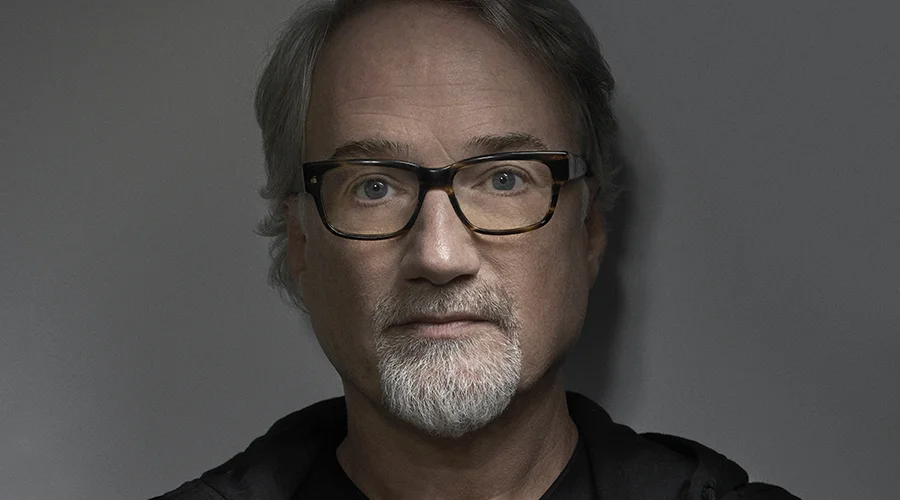
Réalisateur et producteur américain, David Fincher est né le 28 août 1962 à Denver, Colorado. Figure incontournable du cinéma américain contemporain, il s’est imposé comme le maître incontesté du thriller psychologique et du drame biographique à l’esthétique sombre et rigoureuse. Son œuvre, traversée par une vision désenchantée de la société et une maîtrise formelle obsessionnelle, a profondément influencé le cinéma de genre depuis les années 1990.
Passionné de cinéma dès l’âge de 8 ans, Fincher tourne ses premiers films en Super 8 dans le cadre familial. Admirateur de George Lucas, il intègre au début des années 1980 la société d’effets spéciaux Industrial Light & Magic, où il travaille sur Le Retour du Jedi (1983) et Indiana Jones et le Temple maudit (1984). Il quitte ensuite ILM pour se spécialiser dans la réalisation de clips musicaux et de publicités, fondant sa propre société de production Propaganda Films. Son travail pour Madonna — notamment Express Yourself (1989) et Vogue (1990), récompensés aux MTV Video Music Awards — et pour des artistes comme Aerosmith, George Michael ou les Rolling Stones, lui forge une réputation internationale dans l’image. À 29 ans, la Fox lui confie Alien 3 (1992), son premier long-métrage, dont il renie le résultat en raison des contraintes imposées par le studio. Cette expérience le pousse à choisir des structures de production lui accordant davantage de liberté créative. Il coécrit peu ses films mais entretient des collaborations récurrentes avec le directeur de la photographie Jeff Cronenweth et le compositeur Trent Reznor.
Son style visuel repose sur une palette de couleurs désaturées — tons bleus, verts et jaunes —, une caméra sur trépied plutôt qu’à l’épaule, des mouvements de caméra millimétrés, et un recours à des effets numériques discrets. Il favorise les narrations non linéaires, les flashbacks et une atmosphère de néo-noir pesante. Seven (1995), thriller sur un tueur en série s’inspirant des sept péchés capitaux avec Brad Pitt et Morgan Freeman, devient une référence du genre et génère 327 millions de dollars dans le monde. Fight Club (1999), adapté de Chuck Palahniuk avec Brad Pitt et Edward Norton, est un échec commercial à sa sortie avant d’acquérir un statut de film culte mondial. The Social Network (2010), scénarisé par Aaron Sorkin, retrace la création de Facebook et remporte trois Oscars dont celui de la meilleure musique pour Trent Reznor et Atticus Ross, et vaut à Fincher le BAFTA du meilleur réalisateur. Gone Girl (2014), adapté du roman de Gillian Flynn avec Ben Affleck et Rosamund Pike, confirme son ancrage dans le thriller psychologique grand public. Mank (2020), consacré au scénariste Herman J. Mankiewicz, et The Killer (2023), avec Michael Fassbender, prolongent une filmographie cohérente et exigeante. Au total, ses films ont cumulé quarante nominations aux Oscars, et Fincher lui-même a été nommé trois fois dans la catégorie meilleur réalisateur.
American filmmaker and producer David Fincher was born on August 28, 1962, in Denver, Colorado. A defining figure of contemporary American cinema, he has established himself as the undisputed master of psychological thriller and biographical drama, marked by a dark, obsessively precise aesthetic. His body of work, shaped by a disenchanted vision of society and an uncompromising formal rigor, has profoundly influenced genre filmmaking since the 1990s.
Passionate about cinema from the age of eight, Fincher shot his first films on Super 8 within his family. An admirer of George Lucas, he joined the visual effects company Industrial Light & Magic in the early 1980s, working on Return of the Jedi (1983) and Indiana Jones and the Temple of Doom (1984). He then left ILM to specialize in music video and commercial direction, founding his own production company Propaganda Films. His work for Madonna — including Express Yourself (1989) and Vogue (1990), both awarded at the MTV Video Music Awards — and for artists such as Aerosmith, George Michael, and the Rolling Stones built him a strong international reputation for visual storytelling. At 29, Fox entrusted him with Alien 3 (1992), his first feature film, which he ultimately disowned due to the studio's creative interference. That experience pushed him toward production structures offering greater creative freedom. While he rarely co-writes his scripts, he maintains recurring collaborations with cinematographer Jeff Cronenweth and composer Trent Reznor.
His visual style is built on desaturated color palettes — blues, greens, and yellows — a tripod-mounted rather than handheld camera, precisely calibrated camera movements, and the discreet use of digital effects. He favors non-linear narratives, flashbacks, and a pervasive neo-noir atmosphere. Seven (1995), a serial killer thriller structured around the seven deadly sins with Brad Pitt and Morgan Freeman, became a landmark of the genre and grossed $327 million worldwide. Fight Club (1999), adapted from Chuck Palahniuk's novel with Brad Pitt and Edward Norton, was a commercial failure on release before acquiring worldwide cult status. The Social Network (2010), scripted by Aaron Sorkin, charts the founding of Facebook and won three Academy Awards including Best Original Score for Trent Reznor and Atticus Ross, earning Fincher the BAFTA for Best Director. Gone Girl (2014), adapted from Gillian Flynn's novel with Ben Affleck and Rosamund Pike, confirmed his command of mainstream psychological thriller. Mank (2020), centered on screenwriter Herman J. Mankiewicz, and The Killer (2023), starring Michael Fassbender, extend a coherent and demanding filmography. Across his career, his films have accumulated forty Oscar nominations, with Fincher himself nominated three times for Best Director.