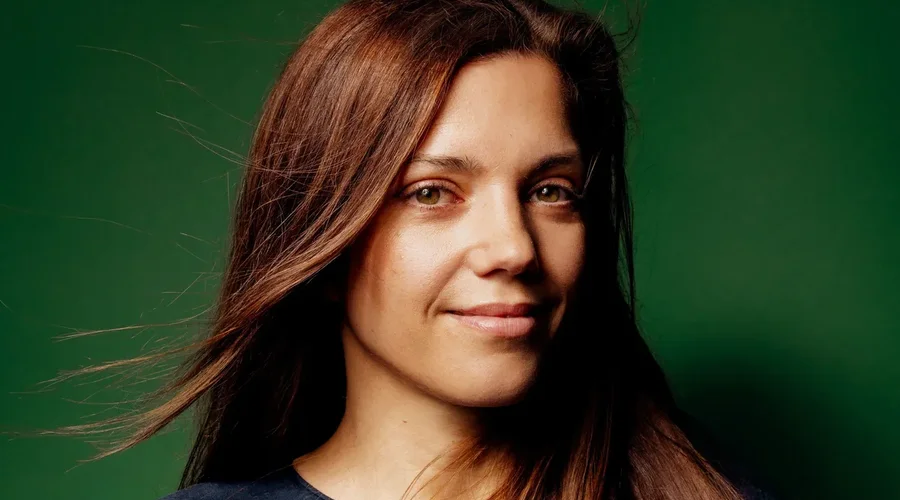
Romancière française née le 11 mai 1981 à Beauvais, Max Monnehay, de son vrai prénom Amélie, s’est imposée dans le paysage littéraire contemporain comme une voix singulière du roman noir et du thriller psychologique. Après un premier roman remarqué en 2006, elle a bâti une œuvre cohérente autour de personnages complexes et de constructions narratives tendues, publiée notamment aux éditions Albin Michel, au Seuil et chez Harper Collins.
Après une hypokhâgne et des études de lettres modernes, Max Monnehay intègre le cours Florent avant de rejoindre le Method Acting Center, où elle suit en parallèle des cours d’écriture scénaristique, formation qui irrigue durablement son rapport à la structure narrative et au dialogue. En 2006, elle publie son premier roman, Corpus Christine, chez Albin Michel, récompensé par le prix du premier roman et tiré à 16 000 exemplaires. Après un silence de six ans, elle revient avec Géographie de la bêtise (2012) au Seuil, puis Comment j’ai mis un coup de boule à Joey Starr (2013). En 2020 paraît Somb, qui marque un tournant vers le roman policier avec l’apparition de Victor Caranne, psychologue carcéral à la prison de l’île de Ré, personnage récurrent qu’elle prolonge dans Je suis le feu (2022) et À la gorge (2024). En 2025, Chiens fous paraît chez Harper Collins.
Son écriture se caractérise par une syntaxe directe, un rythme rapide et des dialogues cinglants qui structurent les scènes comme des affrontements. Les thématiques récurrentes tournent autour de la psychologie des criminels, des failles humaines, des milieux carcéraux et judiciaires, avec une attention constante aux fausses pistes et aux dénouements déstabilisants. Son premier roman a été rapproché par la critique de l’univers d’Amélie Nothomb pour son ton singulier et son énergie de style. Dans ses romans noirs, l’influence de la structure scénaristique est sensible dans le découpage des chapitres et la gestion de la tension.
Corpus Christine (Albin Michel, 2006) reçoit le prix du premier roman et le prix du 20e anniversaire de l’Été du livre 2007, posant d’emblée Monnehay comme une voix à suivre. Géographie de la bêtise (Seuil, 2012) est une fable sociale sur l’exclusion, portée par le même style acéré. Somb (Seuil, 2020), premier volet de la série Victor Caranne, lui vaut le prix Transfuge du meilleur espoir polar et la reconnaissance de la critique spécialisée, Alexandra Schwartzbrod notant que le milieu du roman noir français allait devoir compter avec elle. À la gorge (Seuil, 2024) et Chiens fous (Harper Collins, 2025), thriller judiciaire se déroulant entre Bordeaux et l’Andalousie, confirment son ancrage dans un polar psychologique maîtrisé, à la fois accessible et exigeant dans sa construction.
French novelist born on May 11, 1981, in Beauvais, Max Monnehay — whose given name is Amélie — has established herself in contemporary French literature as a distinctive voice in crime fiction and psychological thriller. After a widely noticed debut novel in 2006, she has built a coherent body of work around complex characters and tightly constructed narratives, published notably with Albin Michel, Seuil, and Harper Collins.
After completing a preparatory course in humanities and a degree in modern literature, Max Monnehay trained at the Cours Florent drama school before moving to the Method Acting Center, where she also studied screenwriting — a formation that has lastingly shaped her approach to narrative structure and dialogue. In 2006, she published her debut novel Corpus Christine with Albin Michel, which won the Prix du premier roman and sold 16,000 copies. After a six-year hiatus, she returned with Géographie de la bêtise (2012, Seuil), followed by Comment j'ai mis un coup de boule à Joey Starr (2013). In 2020, Somb marked a shift toward crime fiction with the introduction of Victor Caranne, a prison psychologist at the Île de Ré penitentiary, a recurring character she revisited in Je suis le feu (2022) and À la gorge (2024). In 2025, Chiens fous was published by Harper Collins.
Her writing is defined by direct syntax, fast pacing, and sharp dialogue that structures scenes like confrontations. Recurring themes include criminal psychology, human frailty, prison and judicial environments, with sustained attention to misdirection and unsettling endings. Her debut was compared by critics to the universe of Amélie Nothomb for its singular tone and stylistic energy. In her crime novels, the influence of screenwriting training is evident in the chapter-by-chapter pacing and tension management.
Corpus Christine (Albin Michel, 2006) won the Prix du premier roman and the 20th anniversary prize of the Été du livre 2007, immediately positioning Monnehay as a writer to watch. Géographie de la bêtise (Seuil, 2012) is a social fable on exclusion, carried by the same sharp prose style. Somb (Seuil, 2020), the first Victor Caranne instalment, earned her the Prix Transfuge du meilleur espoir polar and critical recognition, with literary critic Alexandra Schwartzbrod noting that the French crime fiction world would have to reckon with her. À la gorge (Seuil, 2024) and Chiens fous (Harper Collins, 2025), a legal thriller set between Bordeaux and Andalusia, confirm her command of psychological crime fiction — accessible yet demanding in its construction.