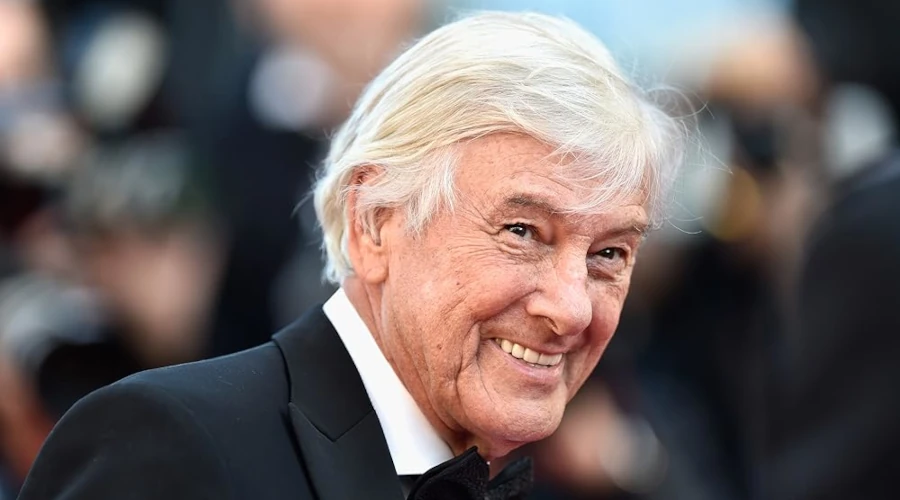
Paul Verhoeven, né le 18 juillet 1938 à Amsterdam, est un réalisateur néerlandais dont la carrière s’étend sur plus de soixante ans, entre les Pays-Bas, les États-Unis et la France. Diplômé en mathématiques et physique, il s’est imposé comme une figure singulière du cinéma de genre, mêlant satire mordante, violence frontale et sexualité explicite. Le cinéma de Paul Verhoeven, souvent provocateur, explore avec constance le trouble du désir et l’hypocrisie sociale.
Diplômé en mathématiques et physique à l’université de Leiden, Paul Verhoeven découvre le cinéma en réalisant des courts métrages durant ses études, puis un documentaire militaire pour la Marine royale néerlandaise. Il se fait remarquer à la télévision avec la série Floris, qui révèle Rutger Hauer, son acteur fétiche. Son premier long métrage, Business is Business, sort en 1971, suivi en 1973 par Turkish Delight, succès international nommé à l’Oscar du meilleur film étranger. Il poursuit sa carrière néerlandaise avec Katie Tippel, Le Choix du destin, Spetters, Le Quatrième Homme et La Chair et le sang. En 1985, il s’installe aux États-Unis, où il enchaîne RoboCop, Total Recall, Basic Instinct, Showgirls, Starship Troopers et Hollow Man. Au début des années 2000, il retourne en Europe, d’abord aux Pays-Bas avec Black Book, puis en France avec Elle et Benedetta.
Turkish Delight (1973), drame romantique avec Rutger Hauer, obtient une nomination à l’Oscar du meilleur film étranger et reste considéré comme l’un des meilleurs films néerlandais jamais réalisés. RoboCop (1987), satire de science-fiction, devient un succès international et un classique du genre. Basic Instinct (1992), thriller érotique avec Sharon Stone et Michael Douglas, marque l’un des plus grands succès commerciaux de Paul Verhoeven et alimente une controverse durable autour de sa scène d’interrogatoire. Showgirls (1995), critique du monde du spectacle, est accueilli très froidement par la critique à sa sortie, récoltant plusieurs Razzie Awards, avant de connaître une réévaluation critique progressive et de devenir un film culte. Elle (2016), thriller psychologique porté par Isabelle Huppert, remporte le César du meilleur film en 2017 et vaut à son actrice le Golden Globe de la meilleure actrice dans un drame, confirmant le statut de Verhoeven comme cinéaste majeur du cinéma européen contemporain.
Paul Verhoeven, born 18 July 1938 in Amsterdam, is a Dutch director whose career spans more than six decades across the Netherlands, the United States and France. Trained in mathematics and physics, he established himself as a singular figure in genre cinema, blending biting satire, explicit violence and frontal sexuality. Paul Verhoeven's films, often provocative, persistently explore the ambiguity of desire and social hypocrisy.
Trained in mathematics and physics at Leiden University, Paul Verhoeven discovered filmmaking by directing short films during his studies, followed by a military documentary for the Royal Dutch Navy. He gained recognition on television with the series Floris, which introduced Rutger Hauer, his recurring leading man. His first feature, Business is Business, was released in 1971, followed in 1973 by Turkish Delight, an international success nominated for the Academy Award for Best Foreign Language Film. He continued his Dutch career with Katie Tippel, Soldier of Orange, Spetters, The Fourth Man and Flesh and Blood. In 1985, he moved to the United States, where he directed RoboCop, Total Recall, Basic Instinct, Showgirls, Starship Troopers and Hollow Man. In the early 2000s, he returned to Europe, first to the Netherlands with Black Book, then to France with Elle and Benedetta.
Turkish Delight (1973), a romantic drama starring Rutger Hauer, received an Academy Award nomination for Best Foreign Language Film and remains regarded as one of the greatest Dutch films ever made. RoboCop (1987), a science-fiction satire, became an international hit and a genre classic. Basic Instinct (1992), an erotic thriller starring Sharon Stone and Michael Douglas, ranks among Paul Verhoeven's biggest commercial successes and sparked lasting controversy over its interrogation scene. Showgirls (1995), a scathing portrait of the entertainment industry, was met with harsh critical reception on release, earning several Razzie Awards, before undergoing a gradual critical reassessment and achieving cult status. Elle (2016), a psychological thriller led by Isabelle Huppert, won the César Award for Best Film in 2017, with Huppert receiving the Golden Globe for Best Actress in a Drama, confirming Verhoeven's status as a major figure in contemporary European cinema.